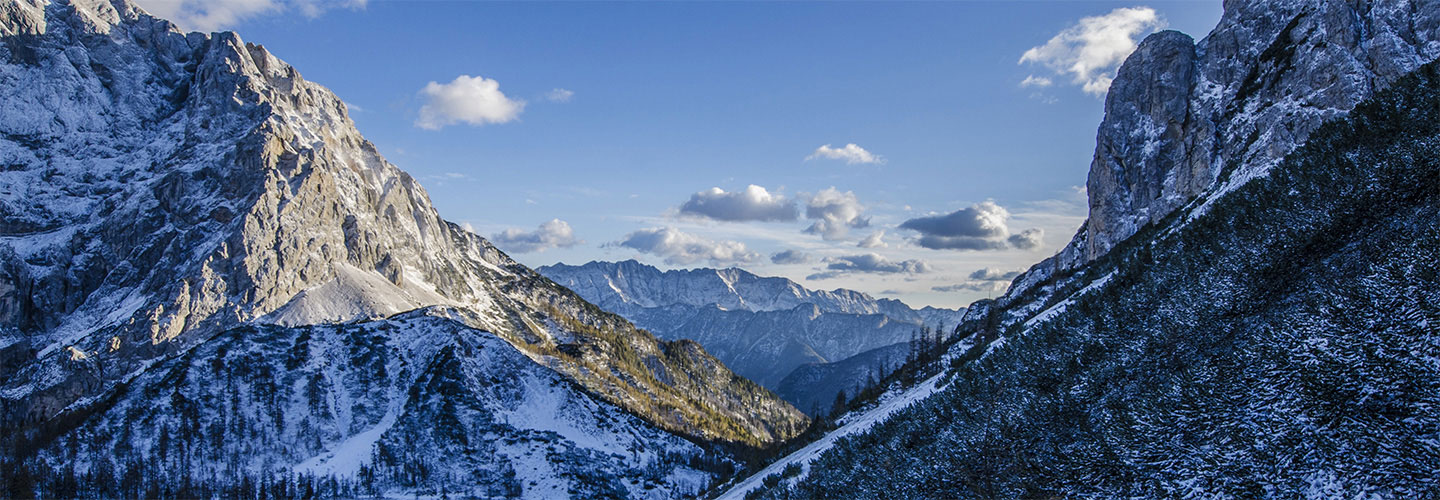
When I first imagined this series, I expected the war itself would occupy most of the story. I also only thought it would be a slightly longer single episode. Instead, the characters insisted that before we could understand the battles, we first needed to understand what those battles cost the people waiting at home. So what should have been a brief rendition with maybe a few characters developed more fully has turned into a multi episode epic. Odyssey, eat your heart out. This episode became less about armies and victories, and more about the quiet devastation left behind when violence reaches those who never carried a weapon. This happens even today when war hits those that didn’t ask for it. And it breaks my heart.
Without giving too much away, Part 2 follows life in Vanaheim as the war drags on, the growing burden carried by those left behind, and the tragedy that forever changes the royal family. It is, without question, the most emotionally difficult episode I have written to date.
As always, this series is rooted in the surviving Old Norse sources—including the Poetic Edda, Skáldskaparmál, and Ynglinga saga—while using Unverified Personal Gnosis (UPG) and informed speculation to bridge the many gaps those texts leave behind. My goal is not to rewrite the lore, but to explore one possible way these events might have unfolded while remaining true to the spirit of the surviving traditions. I continue to take quite a lot of liberties with relationships and chronology where the surviving texts remain silent, as that is how the story has unfolded for me. Your understanding may follow a different path, and that’s perfectly okay.
I also want to repeat the content warning from Part 1 because it becomes even more important here.
Sometimes the stories that come through to me reflect the brutality of earlier times. The people who first heard and retold these stories did not soften them for comfortable audiences, and neither do the surviving sources. Snorri preserved much of the mythology through the lens of Christian Iceland while attempting to preserve older poetic traditions, but when I ask how this story wishes to be told, what comes through is often difficult to write, let alone hear.
Please be aware that this episode contains graphic descriptions of violence, war, grief, and the deaths of both adults and children. Nothing has been included for shock value alone. Every difficult scene serves the story, the characters, and the emotional weight of what follows. Even so, if you live with PTSD related to violence, abuse, or the loss of a loved one, I encourage you to practice self-care and listen in smaller portions if needed. This is also not an episode I would recommend for listeners under the age of eighteen.
The image accompanying this episode may look quiet at first glance. That was intentional. One of the greatest obscenities of this chapter is that Vanaheim itself still stands. The forests remain green. The grass still grows. The great hall still watches over its people. It is life that has vanished. Sometimes absence tells a more terrible story than destruction ever could.
Thank you, as always, for walking this road with me. I hope you’ll continue the journey of this story and find threads of truth and deeper connection to those I portray within it. As a quick aside, I am working on episode 3 but it may be a few more days before I get it published. Perhaps George Martin ought to take a few pointers from me.
I had thought to have today’s podcast completed and posted by now, but apparently the characters involved have a lot more to say. There isn’t much within the existing source material about Gullveig or the Æsir/Vanir war. Since I wouldn’t be able to give a full podcast using just the lore I thought – hey, why not tell it as a story, fill in some of the gaps with UPG, and give one way that the events could have gone down.
Except as I have begun writing this, Gullveig/Heiðr decided to share some details of her ordeal and then the events began pouring out onto the pages faster than I can type. I am only taking a break now to make this post. I am 22 pages in and only now are working on the Vanir party talking about the wergild the Æsir should pay. I had no idea when I started this that so much would be forthcoming. Of course, if I reduced the font to a regular 11 or 12 rather than a 14 it would be fewer pages. But I am getting old and I need the bigger text. Stupid eyeballs failing me.
Yes, I will be making nearly 95% of this tale UPG, but what exists are tiny threads I am trying to weave into a probable story rather than a factual one. Another person may take it a completely different way, which is good as that is how the mythology lives on. So, as soon as I have enough to record and post, I will upload to the various channels. I may need to do this in parts considering how much detail is coming through. We will see.
In the meantime, enjoy the heat wave hitting most of the U.S.A., I know I am dying from the swamp ass currently going on in the south.
Almost everyone has had the experience of being stranded somewhere unfamiliar. Maybe your car breaks down on a lonely road. Maybe your flight is canceled hundreds of miles from home. Maybe you’ve simply arrived somewhere new where you don’t know a single person. In those moments, you’re suddenly aware of just how vulnerable a stranger really is. We like to think hospitality is simply good manners, but for most of human history it was something much larger. Hospitality wasn’t invented because people were exceptionally kind, but because civilization itself depended upon it. Entire communities depended upon the assumption that if someone arrived at your door hungry, cold, or exhausted, there was an understood way to receive them. Without that expectation, travel became dangerous, trade became impossible, and trust between neighboring communities quickly unraveled.
One of the oldest clues we have comes from a reconstructed Proto-Indo-European word: *ghosti-. It’s a fascinating little linguistic fossil because it eventually gave rise to words that today seem almost contradictory. Guest. Host. Hospitality. Hostel. Hospital. Hostage. At first glance those words don’t seem to belong together, but they all point back toward the same ancient idea. A stranger was neither friend nor enemy when they first crossed your threshold. They were possibility. Everything that happened afterward depended upon how both people honored the relationship that had just begun.
When we open the Hávamál, we’re not reading a book of commandments. We’re overhearing accumulated wisdom from generations of people who understood how fragile a community could be. The opening verses don’t begin with grand philosophy, they begin with practical necessities:
Jackson Crawford Translation (2015)
Carolyne Larrington Translation (2014 revision)
(Stanza 2)Hail to the hosts! A guest has arrived, where shall he sit? He is a man in a hurry, who stands by the door hoping for hospitality.
(Stanza 2)Hail to the givers! A guest has come in, where is he to sit? Great is the haste of him who on the walkways must try his luck.
(Stanza 3)He needs a fire, the man who has just come in with cold knees. He needs food and clean clothes, the man who has traveled over the mountains.
(Stanza 3)Fire is needed by him who has come in and is cold about the knees; food and clothes are needed by the man who has traveled over the mountain.
(Stanza 4)He needs water, a towel, and a warm welcome, goodwill, and a chance to speak and be listened to.
(Stanza 4)Water is needed by him who comes to the meal, a towel and a hearty welcome, goodwill, if he can get it, talk and a turn to speak.
(Stanza 135 – Loddfáfnismál Section)Do not mock a guest or drive him away at the door. Be good to the poor and friendless.
(Stanza 135 – Loddfáfnismál Section)At a guest do not laugh, nor mock him at the gate, deal well with the needy!
(Stanza 35 – Gestaþáttr Guest Warning)A guest must be on his way, he must not always stay in the same place. A loved man becomes loathed if he sits too long on someone else’s bench.
(Stanza 35 – Gestaþáttr Guest Warning)A guest must go, he must not always stay in the one place; the loved one becomes loathed if he sits too long on another’s bench.
If a traveler arrives with frozen knees, give them fire. Give them dry clothes. Give them food. Offer water before questions. Only after those immediate needs have been met does conversation begin. Modern readers sometimes mistake these verses for simple courtesy, but they read more like social law. Before you know who someone is, before you decide whether you like them, before you determine what business brought them to your hall, you meet their humanity first. This is where I think we fail today – recognizing and meeting humanity.
Conversely, the guest carried responsibilities every bit as important as the host. The Hávamál spends just as much time warning travelers not to overstay their welcome, not to drink themselves into foolishness, and not to become burdens upon the household that received them. Hospitality wasn’t a free meal nor a hotel reservation and the Norse seemed to understand that generosity without reciprocity eventually exhausts itself. It was a relationship built upon mutual respect. Both people entered into obligations the moment one accepted shelter/assistance from the other. Those obligations don’t disappear just because someone is bored, wants to travel, or meets a new guy/gal that makes the once honored guest inconvenient. Both sides must observe their obligations appropriately, then the guest/host relationship is properly honored. That’s something I think we’ve largely forgotten today. We often talk about hospitality as though it’s simply generosity flowing in one direction in short increments, like a limited time offer, making help finite without explanation.
The great halls uncovered at places like Lejre, Borg, Tissø, and Gamla Uppsala weren’t merely oversized houses. They were political spaces. Community spaces. Places where alliances were negotiated, disputes settled, marriages arranged, feasts held, and strangers transformed into allies. Their architecture reflects this purpose. A great central hearth drew everyone together while long benches stretched along the walls according to rank and relationship. The hall wasn’t simply where a chieftain lived. It was where society itself happened. Hospitality wasn’t an occasional act performed there. It was one of the hall’s primary functions. The Tale of Audun and the Bear is the perfect story reflecting just how important hospitality and reputation were for the Norse.
Lokasenna becomes especially fascinating when viewed through this lens. Loki doesn’t simply crash a party, he invokes his right as a guest (and Óðinn’s blood-brother) to receive drink within the feasting hall even after he committed offense against the owner of the hall, Ægir. Technically, Loki’s correct. Once admitted, however, he performs what is known as a “flyting” against nearly everyone present. He insults his hosts, humiliates the guests, exposes private grievances, and transforms what should have been a feast celebrating community into an evening of suspicion and division. The story isn’t merely entertaining because Loki is insulting everyone. It’s entertaining because every person listening would have recognized just how spectacularly he was breaking the social contract. And not a damn one of them contradicted his accusations, implying that he was being truthful.
By now it becomes easier to understand why hospitality occupies such an important place throughout the old stories. It isn’t merely about sharing food or offering a bed for the night. It’s about creating order from uncertainty. Every stranger arrives carrying possibilities that no one can fully predict. They may become a friend, a trading partner, family through marriage, or someone whose arrival changes history altogether. Hospitality created the space where those futures could unfold peacefully. The breaking of it brought unrest and at times, war.
We see this when the Stranger at the Door is named in the Eddas. Gullveig arrives bringing knowledge, magics, and companionship. She was met with suspicion, betrayals, and attempted murder. Not exactly the Æsir at their best. Which made what they did, and how they did it, a gross violation of the rules of hospitality. The result was a devastating war between powerful tribes which I will cover in my next podcast. It seems that every major conflict in Norse Cosmology comes about because one of the gods violated a societal rule.
Today, it is admittedly a lot harder to observe these same rules. We don’t often greet a stranger at our door – mostly due to safety. Yet people still need help and their humanity recognized. If what can be offered is small, simply being honest about it goes a long way. Sometimes the help needed can be easily given and ends quickly. Other times it can take time, years even, and a great deal of empathy and patience. And the one receiving the help is no less human or valuable for needing more assistance for longer than others might. Unless you have lived it yourself – acting as if someone “needs to get their act together” or “I’m tired of helping them” or “they just want a free ride” while abandoning them before they can stand on their own only compounds the problem. The need is still there, and now the issue is larger as they once more try to rebuild, humiliated at the breakdown of ghosti and relationships.
A guest is not the enemy (whether physically or reputation wise) just because the host found something, or someone, better. And vice versa. It’s important to set boundaries, rules, expectations on both sides that are reasonable from the beginning. Working together so that both the host and the guest benefit in the short and long term are what build lasting ties and stronger communities. You never know when that friendship is what saves you in the end.
Reference material:
The Poetic Edda – 2015 translation by Dr. Jackson Crawford
The Poetic Edda – 2014 translation by Dr. Carolyn Larrington
I mean, think about how often we casually throw words around every single day. We promise to call someone back. We swear we’re going to start exercising on Monday. We vow we’re never speaking to an ex again, only to be texting them three weeks later because apparently we all enjoy making poor decisions. Somewhere in the distance, ancient societies are collectively clutching their pearls.
The truth is, we have become incredibly casual with words that older societies considered enormously important. Not because ancient people were somehow morally superior—they absolutely were not (Lindisfarne anyone?)—but because they understood that words had power. And power had consequences. Your word wasn’t simply something you said. It was a social contract, a spiritual contract, and sometimes even a legal one. The world around you could literally be built upon whether someone believed you or not. Oaths, vows, and promises all held, and still hold, similar meanings but with varying levels of intensity and result.
An oath is the heavy hitter of the group. It isn’t something you casually toss out because you’re feeling particularly dramatic that day. Oaths were witnessed. They had a basic formula that was followed. They carried weight because they involved gods, communities, sacred objects, ancestors, and reputations. Temple rings were brought to legal assemblies, sanctified with sacrificial blood, and people swore upon them. Honestly, if you’re holding a ring covered in sacrificial blood while making a declaration, you’re probably not supposed to treat it like clicking “Accept Cookies” on a website you didn’t bother reading. The entire point was accountability. You weren’t just telling another person you would do something. You were telling the universe itself and the universe would hold you to it.
Vows tend to be relational rather than transactional. They aren’t usually about accomplishing one specific thing but about becoming a certain kind of person over time. Marriage vows are the obvious example, but modern pagans do this too. We make devotional vows to gods. We promise to maintain a practice, tend an altar, or live according to certain values. Sometimes we make vows as a reciprocal consequence for help from the gods and spirits. The problem is that modern people occasionally get a little overexcited. One profound meditation later and suddenly we’re declaring eternal devotion for the next fifty years. Slow down there, my little heathens. The gods have been around for thousands of years. They are not tapping their wrist impatiently waiting for you to sign a lifelong contract after one meaningful candle experience.
Society runs on tiny promises that we rarely think about. Showing up to work, feeding your animals, paying a bill, checking on a friend, watering the garden, returning a borrowed item. Every single day we make dozens of tiny agreements with the world around us. We only notice them when they stop happening. That’s actually kind of impressiv. Human civilization is essentially one giant trust exercise with occasional paperwork attached.
Which naturally opens the door to discussing why ancient societies cared so much about this. It wasn’t simply because they were more honorable. It was because survival demanded reliability. There was no customer service department to call if someone cheated you. There was no online review system to warn others. Your reputation was your currency. One oathbreaker could destabilize an entire family, a trade relationship, or a community. Trust wasn’t a pleasant personality trait. It was the basis for community infrastructure.
This is where modern paganism has something valuable to relearn. We spend a lot of time discussing ritual tools, correspondences, moon phases, and elaborate ceremonies, but we don’t always talk about dependability or reliability. Holding to what we preach even when it is inconvenient or expensive. This may be one of the most sacred acts available to us. Showing up repeatedly when you said you would no matter how many times or ways; even if you feel the other person isn’t worthy anymore. Your word matters and it doesn’t expire just because you’re tired of it. Following through when nobody is watching and being the person others can build around is an essential part of our modern practices.
Promising a deity your eternal service because you had one emotional experience during a full moon isn’t necessary. Sit with it for a while. Let the relationship develop naturally beyond initial excitement. Ancient people weren’t speed-running spirituality and neither should we.
The lesson isn’t that we need to start speaking less. It’s that we need to speak more intentionally. Ancient societies understood that words weren’t just sounds that disappeared into the air. They built realities. They created trust. They forged the backbones of communities. They shaped relationships that could last generations. In many ways, words were the architecture. Every time we make a promise, a vow, or an oath, we’re laying down another stone that other people may eventually stand upon.
So perhaps we should be a little more careful about what we’re constructing. Because, as the title very accurately reminds us, our mouths are indeed writing checks our spirits may eventually have to cash. Be sure you have what you need in the bank.
he idea of sacred space and how we approach it as modern pagans has been on my mind. With my current home situation figuring out how to set that space, and feel ANYthing at it weighs a bit. At some point, over the course of our practice, many of us quietly develop a checklist depending on whether it is group or individual ritual.
We start with an idea that we need an altar. That altar needs bling, right? We need candles, tools, maybe if money allows we need statues. We collect and polish, wrap carefully after ritual if in a public place, place the bling in totes that we haul from place to place and take turns storing until the next high day. If we are really lucky maybe a special room, place in a yard, a sacred dedicated space in nature. If all else fails, we start eyeing bookshelves and wondering if we can convince a cat to surrender eighteen inches of territory if we give them enough treats as sacrifice.
Don’t get me wrong, I love altars. I have lots of them myself, but currently everything is in boxes contained in a 10×20 storage unit while I am across the country. My cousin will refer to belongings as “just stuff” that you can walk away from at any time and just replace it. I get that, and I am truly happy that she is in a place where easily replacing your belongings is a viable option. I am not at that point. I’ve lost everything so many times that I hold on to what I DO have as it an extension of me. A hard earned, well thought out item that brings me joy and a sense of accomplishment. Our altars are the same. I wonder sometimes, though, if we’ve unintentionally trained ourselves to believe that sacredness only exists where we’ve deliberately placed it. If the candles aren’t lit, or the trappings not changed for the new season, the incense isn’t burning, have we somehow convinced ourselves the sacred part is temporarily closed?
In the small selection of material we have, a different picture emerges. The farther you wander back into early pagan societies, the less you find spirituality separated from life itself. Rather than a room, table, or shelf you begin finding places. A grove, a spring, a stone, a crossroads, or even a hill. There might have been a tree that everyone in the community simply knew was important. Sacredness wasn’t always built the way we do today. Sometimes it was just recognized.
Take the Icelandic concept of sacred mountains and protected landscapes. We see hints of this in the Icelandic sagas and settlement traditions where certain hills, stones, and features of the land were approached with respect. Land wasn’t simply property. It carried presence. The Landvættir, spirits of place, remind us that people weren’t walking around assuming every space belonged entirely to them. There was an understanding that you were sharing the world with other beings. You were a participant, not the owner.
We see something similar with sacred groves across Germanic and northern European traditions. The Roman historian Tacitus describes communities gathering in wooded spaces rather than elaborate temples. While we always have to take Roman, and Christian, observations with a healthy pinch of salt, the larger pattern appears repeatedly throughout archaeological evidence. People met the sacred outdoors. They gathered where the world already felt different to them. There wasn’t a need to build an elaborate structure because the place itself was the structure.
Even in later Scandinavian folklore, that relationship continues. Certain hills belonged to hidden folk. Certain waters deserved offerings. Trees were left alone entirely because everyone understood there was a relationship there that wasn’t purely human. Until monotheism came through and attempted to destroy it all. Time progressed, societies changes, and we moved forward.
Then somewhere along the line, we reached modern life. We paved and scheduled things. We compartmentalized. We became very efficient little creatures. Home. Work. Errands. Spirituality. Everything got sorted neatly into its own container and labeled much like that hall closet with all your yuletide totes. Which means many of us now approach sacred space as though we’re trying to manufacture it from scratch every single time.
Light the candle. Spirituality activate! Extinguish candle. Spirituality dissipate. With that final take down, the gods politely clock out until further notice. Life returns to the mundane. I say that with affection because I’ve absolutely done it too. But the older I get and the longer I practice, the more I’ve started wondering if sacred space is less about creating a separated idea and more about just paying attention to what is already there. Perhaps sacred space isn’t a destination at all, but simply a relationship.
I don’t think our ancestors spent every waking moment performing ritual. They still had chores, children, weather, illnesses, stubborn livestock, and neighbors who probably irritated them from time to time. Life was still life. But the sacred wasn’t confined to an appointment or an eight-spoked calendar. It was woven into every day living. That doesn’t mean our altars are meaningless. Quite the opposite. They can become beautiful focal points and anchors within our constant practice.
The problem above only appears when we start believing sacredness lives exclusively at that particular spot. The gods don’t disappear because we left the house. The ancestors don’t stop existing because we’re standing in a grocery store. The land doesn’t stop being alive because we’re walking through a parking lot instead of a forest. Sacred space was never a room. It was never a piece of furniture. It was never an aesthetic. It was never a social media photograph with twenty-seven candles and suspiciously perfect lighting. It was relationship, attention, and participation. Maybe that’s one of the biggest things we can reclaim as modern pagans. Permission to stop trying so hard. Permission to allow sacredness to be a little messy and a little ordinary.
After all, some of the oldest spiritual traditions we have survived precisely because they weren’t separated from life. They were embedded within it. Maybe the sacred was never asking us to build a doorway. Maybe it was simply waiting for us to realize we’d been standing inside it the entire time.
Enjoy this summer sunshine and even the stormy weather. Remember to take a moment out of your day and find your sacred breath.
Fall Equinox 2025, and Winter Finding 2025 are now done.
I’ve been working on a couple of projects this last week. My twelve days of Samhain journal is now finally up on Lulu. It wouldn’t let me post a link to click on so here is a quick screenshot:
It’s designed to walk someone through extending the Samhain season with a small rite over 12 nights. It is only a little journal rather than a book with history and practices. I think it will appeal to people new to ancestor veneration and those that might struggle coming up with their own words. It’s a nice little companion piece.
In addition, I just put up my first podcast on Podbean! I’ve always hated the way I sound on recordings. I am also not very good with clipping audio files together. I will admit I stuttered quite a bit and had to write out my thoughts ahead of time so I wouldn’t run off on any tangents. I suppose I could have re-recorded but after several hours putting it together my butt was hurting. I hope I sound a little more natural than I think I do. It’s a blend of mythology with a sprinkle of educational content. Nothing too heavy but it’s a good beginning before diving in headlong towards really out there UPG.
The programs that I used for things like this in the past either don’t exist anymore or they have changed to the point that I no longer have the skills to use them effectively so user error most likely. Then there are the ones that became pay only. Ugh. As I am still unemployed, they are luxuries I will have to forego for the foreseeable future so subpar audio it is. Here is the link if you care to listen. I apologize for any weirdness in the audio. I have a new microphone and it doesn’t always get my voice inflections correct. Oh well. It can only get better from here…right? I will cross my fingers that somewhere in the future I will be rich enough to hire someone else to do the editing for me and all I have to do is talk. Goals!
So, what is coming up? Winter Nights the middle of October and then Samhain. I have a lot of my belongings in boxes and totes right now in case I have to put stuff in storage and move. It all depends on whether I find a dang job. That means a much more scaled down version of everything. Tealights and some incense. Work on my pretty words again and that should about cover it.
Healthwise I am doing better. Now that I am not working under such a stress inducing situation most of the inflammation, sleepless nights, and anger have subsided. Definitely happier over all if not a lot broker. I still don’t regret leaving the job, just losing the paycheck.
Other than that not a lot else is going on. I guess now that I have put the first journal out and the first podcast I will have to get going on the follow-ups. In the meantime –
I’m not even going to pretend I have had it together these past two years. Every time I lay out my plans, with the best of intentions, the Universe conspires to knock it out of the park.
So, fast updates – I left my job of 6 1/2 years back in July. The manager treated me differently than the other members of the team leading to a toxic situation for me. I wrote the position I was originally hired for back in May 2020 when the company changed how they imported their data to the system. I was the only one doing it and had to work with three departments to build and fine tune the process. I was the subject matter expert. I generally pulled between 50-65 hours a week to make sure everything was done on time and accurately. I applied for and accepted a new rule under the same manager in Sept 2021. Trying to hire someone to replace me in the old role turned out to be a significant challenge. They ended up hiring three different people to do the work I had done by myself. Then in the spring and early summer of 2025 I had to watch as the new guy of 9 months received not one, but two back to back awards for doing the job I built. A job I was never nominated for in all the time I did it. A man received two awards within 4 months, had not completed his initial training, and whose work I was constantly correcting because he had no office skills. The woman who did the job for six years didn’t even receive a public thank you in all that time. Red Flag! The manager kept up the passive aggressive BS she began exhibiting two years prior of “I realize no one else appreciates you, but I do.” Red Flag! As of April 2025 I had still not been transitioned into the role I accepted in 2021. After complaining to the director, a hard stop date was established. The problem? When I was set to begin learning about the new role the manager admitted that she didn’t have any way to train for the position established. So in 4 years of waiting they didn’t put a single thing together to transition me. Red Flag! Add to that the fact that since I complained against my manager I was now further isolated underneath her thumb and kept from interacting with others. Red Flag!
In June I went to my PCP who had been trying to figure out what was wrong with all my blood work and why none of our care plans were having an impact. It was a different physician than my usual one and she laid it out pretty bluntly: ‘you need to get rid of whatever this thing is that is causing all your stress. We can’t get the inflammation down until you get your body out of flight or fight survival mode.’ The main thing causing me the frustration and stress? The thing that even on the weekends, holidays, and time off I couldn’t seem to de-stress from? My job. I was hesitant what with the current climate. I made good money, decent time off, some flexibility for dr appts, and had longevity. I had been trying to find a new job for over a year to no avail so I kept trying to hold on hoping it would get better. I pulled jury duty the last week of the month and when we got back a little earlier than expected that week (3 days instead of 4) due to no cases, I logged into work. Not a single person spoke to me the entire day. Something in me cracked. I wrote up my resignation letter and began to compute my finances to see how long I could make it. After doing math several times, I scheduled my resignation letter to post to my manager and director over Fourth of July. The next week was my last. Not a single person from my team spoke to me, said goodbye, or good luck the entire week. Not one. However, directors and people from multiple other departments messaged me to say thank you for all of my hard work and how they had appreciated everything I did to keep things going over the years. Interesting. My manager said no one appreciated the things I did.
The first week off was surreal. I made sure to pay bills off where I could, crossed all the t’s, dotted all the i’s for the road ahead. I tweaked my resume and began to apply for jobs in earnest. The next several weeks I finished paying off some other debts to where now I only have student loans. I had budgeted to be okay through October but then discovered last week that my student loans kicked back in sooner than expected throwing my whole budget off. Now I have until the end of September to become gainfully employed. Yet I don’t regret leaving the job. I regret not having the longevity of time and the pay checks as the housing market is finally becoming manageable again. I am irritated by that one. I will be starting over from scratch again unless I receive a windfall of funds from somewhere. Anyone know a sugar daddy for me? My health has improved. Most of the inflammation has gone down and I am actually getting sleep even though it’s in smaller chunks throughout the day and night rather than just one long stretch. Mentally and emotionally I am not the train wreck I had become by the time I quit. I am getting nervous about the job thing now that my time frame is shortened by a month and what responses I get are either spammed/spoofed jobs or rejections. I am over-qualified and old. No one wants to pay what I am actually worth for the skills I have gained over the years. I have a minimum threshold in order to make ends meet on a single income household so I can’t take just anything if the pay isn’t high enough. Then there are a bunch of new programs and processes that I have never had to use, which eliminates me from a lot of positions when they mark it as required. And when they figure out my age, well that just puts the nails in the coffin. 😛
So writing, reading, rituals, yard work, house work…it’s all been hit or miss over the past two years with mostly misses. I still have things rattling around in my head, and some notes I have dictated, but the current upheaval in my life seems to be causing a reading/writing block. The spirits say: create your own job. I say: how the hell do I do that when I hate cameras, do not have video editing skills, write like a 12 year old, need to pay ever increasing cost of living bills NOW, and have lost my love of reading thanks to OSU?
Sigh.
So this is where I have been. And where I am now. Let’s see if I can pull my ass out of the fire again.