Have a seat around the campfire little Heathens and Heathen Friendlies. It’s time for another tale. The wind howls outside the circle of our fire, and as the embers pop and dance, it’s easy to imagine a darkness much older than the night around us. Grab a drink, sit back, and get comfortable. Let’s talk about how it all ends.
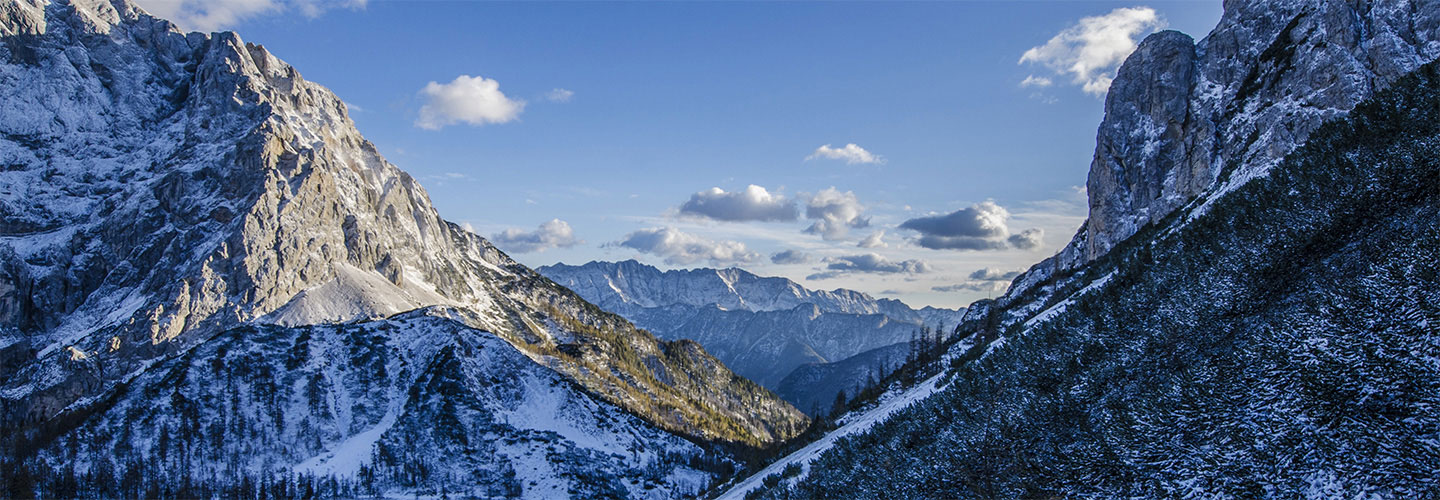
Imagine a winter that knows no boundaries. No spring to break the frost, no summer sun to warm your face—just three straight years of blinding snow, biting gales, and a deep, penetrating cold. The old texts call this Fimbulwinter, the twilight of the worlds, and it is the first true sign that the end has begun. In the ancient, golden halls of Asgard, the gods watch in horror as the world of men tears itself apart. Baldur and Hodr are dead. Loki has long been bound, his own young sons killed to balance the scales. Down in Midgard, brothers have turned on brothers out of pure greed, and the sacred bonds of family shatter in the freezing dark.
Then, the sky itself cracks open.
Two giant wolves, Sköll and Hati, they who have chased the sun and moon since the binding of Loki’s son, finally catch their prey. They open their jaws and swallow the chariots and bodies of Sunna and Mani whole, plunging the nine realms into absolute, pitch-black darkness. The earth begins to tremble so violently that mountains crumble to dust, old trees tear free from their roots, and every chain, every rope, and every magical bond ever forged snaps instantly.
And with those shattered bonds, the monsters are freed.
The Great Wolf Fenrir snaps the unbreakable chain the gods bound him with. His jaws stretch so wide that his lower teeth scrape the dirt while his upper muzzle touches the heavens, fire blazing from his eyes and nostrils as he rushes forward to consume the cosmos. The veil between the worlds shreds and crumbles finally opening them to each other. Deep beneath the ocean, the Midgard Serpent, Jörmungandr, writhes in absolute fury at the abuses heaped upon him by Óðinn’s son. It thrashes toward the land, causing the vast oceans to surge and flood violently over the shores, spewing a foul venom that poisons the sea and suffocates the sky. Laufey’s son is no longer confined to his cave, he has ventured forward, the final reckoning humming in his blood.
From the frozen east, a horrific ship made entirely from the unpared fingernails of dead men—Naglfar—sets sail, steered by the giant Hrym and captained by Loki himself. Within its hold, the souls of the dead in Helheim have risen, their mistress having relinquished her grip. From the south, the skies split open as the fire-giants of Muspelheim ride forth into the dark. At their head is Surtr, carrying a blazing sword that burns brighter than any sun. As they charge across Bifröst, the rainbow bridge connecting the realms groans and shatters beneath their immense weight.
Heimdall, the loyal watchman of the gods, lifts the horn Gjallarhorn to his lips and blows a blast so loud, so resonant, that it echoes through every corner of the nine realms. The gods awaken, the horn sounding the call to battle, and don their armor. Óðinn rides straight to Mimir’s well to seek counsel one last time, but the time for talking is over. The Allfather draws his spear and leads the Aesir gods and the fallen warriors of Valhalla straight into the jaws of doom.
They all converge on the vast plain of Vigrid, a battlefield stretching a hundred leagues in every direction. The clash is total, bloody chaos. Óðinn charges the great wolf Fenrir with his spear, Gungnir, but the beast – enraged at the centuries bound against his will – opens his massive maw and swallows the Allfather whole, breaking the spear and ending the reign of the king of gods. Instantly, Óðinn’s son Vidar steps forward to avenge his father. Grabbing the giant monster by the head, he places one heavy, leather-bound boot on the wolf’s lower jaw, grabs the upper jaw with his bare hands, and exerts such terrifying strength that he rips Fenrir apart. The sound of other wolves howling in torment rises loudly and echoes across the field marking his final demise.
Nearby, Thor finally faces his arch-nemesis, the Midgard Serpent. Their battle is short but intense, strike after strike fails to take down the world-circler. Then, in a surge of power fueled by hate the air crackles with lightning; Thor raises Mjölnir to collect the white hot power and brings it back down with a deafening crack, smashing the serpent’s skull and ending the ancient monster. But the victory is a hollow one. Before the final strike had fallen, Jormungand had pierced the flesh of his tormentor with fangs filled with poison. Thor turns to walk away, takes just nine heavy steps, and collapses into the dirt, succumbing to the pull of death with his final breaths.
Everywhere you look across the burning plain, old rivalries end in blood. Freyr fights bravely against the fire-giant Surtr, but without his magical sword—the one which he foolishly gave away long ago for love—he is easily cut down. The death of the Lord of Vanaheim and Alfheim ripples through those lands causing mourning songs to soar into the heavens at the loss. Across the field, the watchman Heimdall and the trickster god Loki lock eyes for the final time. Their dislike for one another had been long standing and here, at the final battle, the feud would end. They meet in a brutal, desperate duel, each one powered by their unique abilities. Though not quite evenly matched, cunning surged forth causing them to strike each other down simultaneously. Neither would rise from that field again.
With the great gods dead and the armies decimated, Surtr flings fire in every single direction. The world tree, Yggdrasil, groans and burns from root to leaf. Every rune and sigil flaring to life only to burn down to ash. The earth sours, cracking open and sinking down into the black, boiling sea. The remaining stars vanish from the sky. Mundilfari’s kin having retreated in mourning behind closed doors. There is only silence, smoke, and total darkness.
But as we sit here by this fire, remember: the story doesn’t end in the dark.
Slowly, the waters begin to recede, and a new earth rises green and beautiful from the ocean. The waters fall away to reveal fresh grass, the beginnings of flowers, bushes, and trees. The sun, before she was swallowed by the wolf, had given birth to a daughter more beautiful than herself. This daughter climbed upon a chariot and now rides across the brand new sky. The realms reform from the devastation, those who had retreated and held their lands repaid for their efforts with peace.
The Vanir hostages still living returned to their homeland, the chance to rebuild surging in their blood. Fensalir remained along with its mistress. Jotnar that had lived in both Asgard and Jotunheim now chose one or the other. Dwarves restarted their forges and began to work anew, the Alves once more shared their knowledge and gifts.
A few surviving gods—including Óðinn’s sons Vidar and Vali, and Thor’s sons Modi and Magni holding their father’s heavy hammer—meet in the sunlight. Walking towards them on the horizon are Baldur, Hodr, Narfi, and little Vali. The sons of two brothers returned. Walking through the fields, Hoenir and Lodurr softly retell the stories of the world’s origins. They find the golden chess pieces of the old gods hidden in the weeds, and they sit together to talk of old times and old heroes.
Two humans, Lif and Lifthrasir, who had managed to hide safely within the deep wood of Hoddmimir’s holt, emerge into the morning light. They feed on the fresh morning dew, and from them, a brand new human race begins to populate the world. Or does it? It’s their blood that indeed flows through our veins. It’s their heartbeat we carry when the winters of our own lives get long and cold.
Out of the ashes, life finds a way. Timelines don’t just move forward; they fold right back in on themselves. The past, the present, the future—they are all stacked on top of one another, constantly feeding into the next layer. Because time isn’t a straight line. It’s a tangled, overlapping tapestry where the threads are constantly pulled out, spun again, and rewoven into the exact same pattern. It’s a wild, topsy-turvy cycle. Nothing is truly discarded. The worlds, the stories, even the gods themselves are just being recycled, broken down to their core elements only to be stirred back into the cosmic mix and into our hearths.