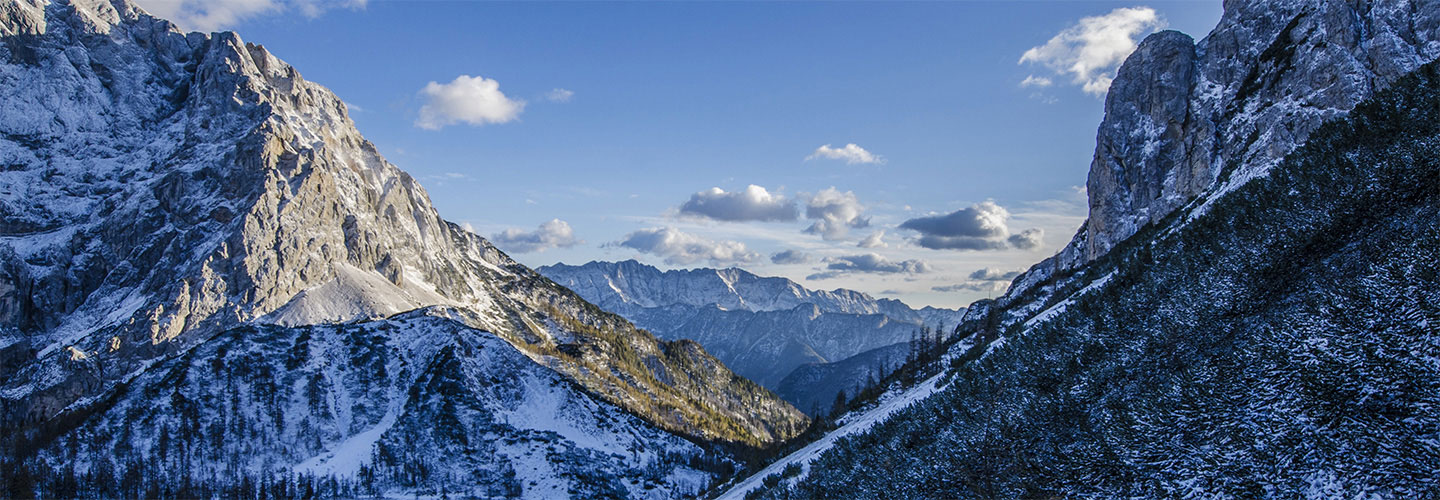
It’s that time in the Northern Hemisphere. Trees are beginning to change colors, the grass is finally dying back, the smell of the air is changing, and cooler temperatures are making their way into most of the U.S.
There are a lot of days ahead that involve celebrations, recognitions, and even gift-giving. It’s a time of fantastic connections to our paths but can also be extremely stress inducing to those with lots of responsibilities or even loss. We have all heard, or said, that the holidays are a hard time of year for many. This is true for pagans as well, especially those in mourning. The busy run-run-run, trying to arrange gatherings around family events, making time for our families, as well as time for our religious practice can be hard. Throw in the plethora of potential “high days” and it’s enough to make you say ‘bah humbug.’
Now let’s add in what to celebrate. As humans we like having familiar, even common/similar, holy days. It helps us to feel that sense of belonging to a larger community. Most, if not all, pagans have heard of the Wheel of the Year. Regardless of pantheon many of them try to adhere to that wheel as it gives structure and a feeling of tying into the seasonal changes around us. The Wheel, however, is a modern construct and is generally tied to Wicca and more specifically Celtic practices. Not that there is anything wrong with that. As a former Druid I followed this wheel idea as well and assigned my own heathen-centric focus on those days. It’s a foundation to start an individual’s journey towards helping work them out of the Abrahamic-centered worldview and into a more Pagan-centric worldview. It has a purpose, and a good one at that, but as a person grows and changes in their faith some may find it a bit out of sync.
As an individual is called, or is drawn, to working with the Northern European pantheons they are going to find that there are fewer descriptions of high days, feasts, or celebrations. We don’t have a lot preserved in our existing source material to help guide us on how to celebrate in a modern setting (existing = extant in manuscript speak 😊). A great many heathens (across different sub-septs) will do some sort of blót, sumble/sumbel/symbel, or faining each month to feast and recognize a hero of a saga, or even a holy day. I really don’t care about lifting a horn to Eirik the Red. I’ve read the Sagas and he is kind of a bully and a jerk. The whole throwing a gathering each month to toast some “hero” of those stories never rang as a true part to my individual practice. If this is something you do, and like it, that’s fantastic. I don’t want to put down anyone’s individual observances. They just aren’t for me. So what about those like me who don’t feel called to that type of heathenry?
I have seen some references, in both source materials and a few historical instances, of sacred/holy times. However, we don’t have specific dates as they worked seasonally. They also had different calendars back then which do not match up to the Gregorian we use today. In addition, we don’t have a lot of descriptions of what actually went on during these observances. With this lack of detail, we here in the modern age (21st century) must do a lot of guesswork and just making shit up as we go. Heathenry of any kind will never be a religion that can be truly reconstructed. There just aren’t enough original sources with detailed data on the religious practices still extant if they were ever written down in the first place. Considering this I have tried to throw together a basic practice for the fall months that could potentially work. Please note that these dates and seasons are specific to the Northern hemisphere, and especially to the United States as that area is where I am the most familiar.
The idea of “Fall” is not one that can be assigned to the northern climes of Scandinavia and the Nordic regions. What information we do have in the lore generally refers to two seasons: summer and winter. The idea of four seasons that follow a 3–4-month span for each season is a modern concept based on the Gregorian calendar and the more temperate climates of the mid-lower United States and southern Europe. This band of the world does experience four seasons to some extent and generally defines them by the calendar. It’s neat and tidy. The world, and its climate, does not work that way though. The further North to the Arctic Circle, or South to the Equator, and you find the four season model tends to go out the window. All of that being said, did the far northern regions experience a Spring or a Fall? Yes. Granted, it was probably only about a week or two. From a Geological standpoint, odds are they didn’t have the 1-2-month gradual turning of the leaves and all things pumpkin that we experience here in the States. But to think there wasn’t a period that warned them winter is coming so they could bring in the harvest is incorrect. We know they had some idea of the extra seasons as we have a Spring Goddess (Eostre, Erce, sometimes Idunna). If there was someone associated directly to Fall, we have sadly lost their name to history but it would stand to reason that one existed at some point. Pagans like balance, as does the Cosmos as a whole. If you have Summer and Winter deities to balance each other, you will have Spring and Fall deities to do the same. Perhaps someone will reconstruct the language and determine a name. Or maybe the Fall deity will suddenly wake up and say, “Yo! I’m here. My name is…” Until then we just have to keep on trucking without it.
(And in case you were wondering…Mabon is a Welsh deity so giving him the name of the entire Fall Equinox seems odd to me. OH! And Lughnassadh is mis-named. That feast is not to Lugh. He created it to honor his foster mother, Tailtiu, who gave her life to end a drought in the land so the people would survive. It’s not his day so it shouldn’t be named for him. Stupid patriarchy. steps down off the soapbox)
The days I am going to give below will each get their own posts, but I wanted to list them out for those who were curious. Two of them have at least some mentions in our preserved sources, but the remainder is my cobbled together version that I try to observe in my own practice. You are welcome to try them. I won’t demand you cite me as the originator, that’s just silly. If it resonates with you, then I offer it freely.
Winter Finding – Generally the new moon nearest the Fall Equinox (either before or after) but occurs prior to Winter Nights. Time to recognize and welcome the cooler weather and the beginning of Fall. This was sometimes interchanged with Winter Nights, but I separate them. 09/14/2023 was the date this year, 10/02/2024 is the date for next year.
Winter Nights – This is generally celebrated near the full moon after the Fall Equinox. As the lunar calendar shifts each year many people celebrate this three-day festival around the middle of October. It marked the beginning of Winter for the Nordic regions. We do have a reference to this celebration in the lore. 09/29/2023 was the full moon for the observance this year, 10/17/2024 is the moon next year. I tend to hold this between the 15th and 17th of October regardless of the moon cycle.
Alfablót – Full moon after the Harvest Full moon. This is often called the Hunter’s moon and usually falls in mid-late October though it can fall in early October or early November. Celebration to honor the male ancestors of the hall/house. Alfablót is a closed feast specifically for one’s own direct male ancestors and is designed for family only. We do have a reference to this celebration in the lore. Date to observe: 10/28/2023, 10/17/2024 next year.
Samhain – this isn’t a day that is remarked upon within heathen sources. It’s a Celtic fire day that balances against the energies of Beltane in May. However, most people do use this time to honor the ancestors regardless of pantheon. For me, I have started observing 12 days of the Ancestors that begins with Samhain on October 31st and ends on November 11th (which is Veteran’s Day in the States and culminates in the recognition of those who have died in defense of our people). The time of Samhain allows one to broaden and include those that are not just blood kin as well as open their celebrations/remembrances to friends and community.
After Samhain we then enter the liminal time before resetting for Winter at Yule. More to come later.